Taking your pet to Europe with you
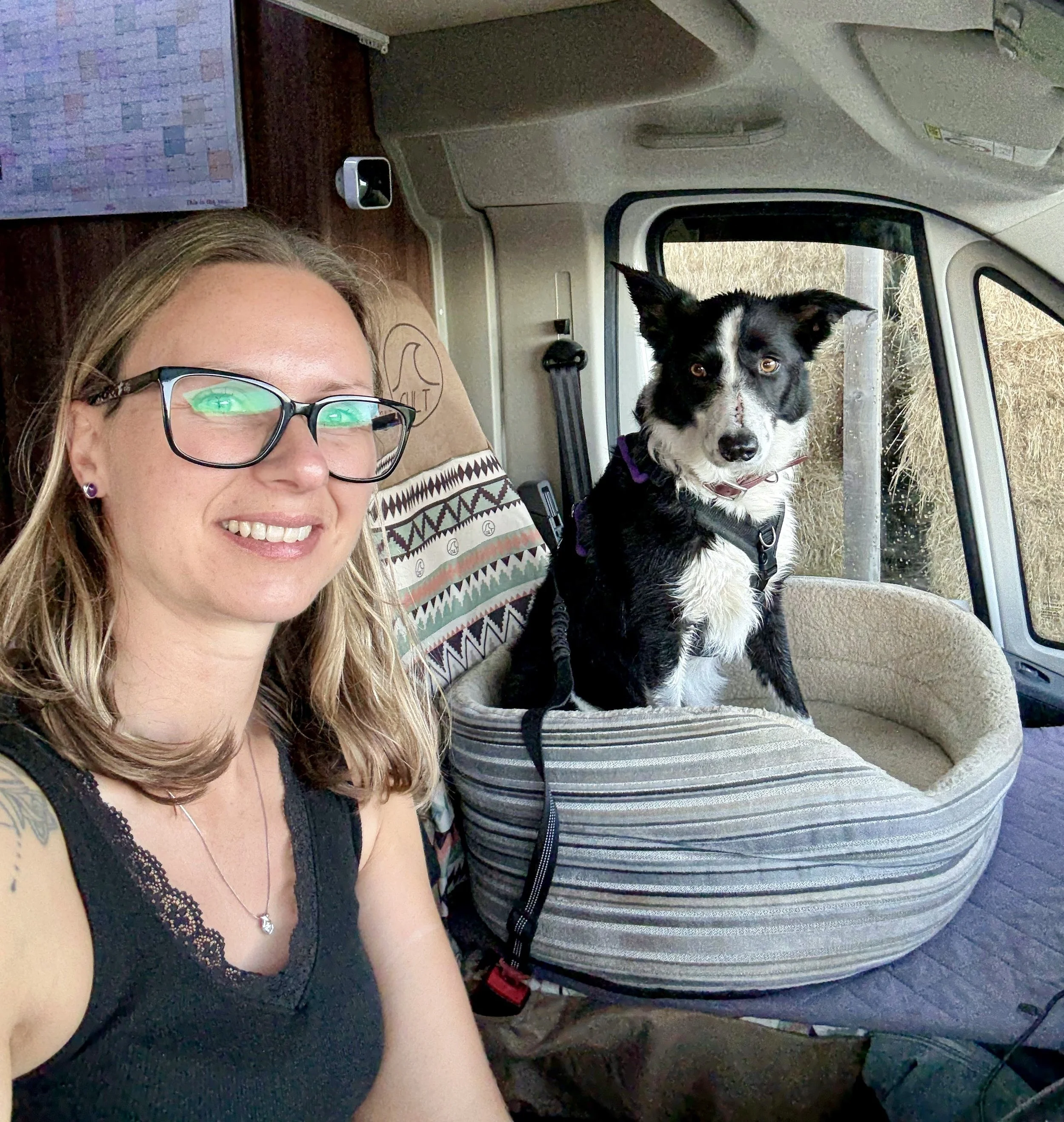
Many people (myself included) want to bring our dogs (or cats) when we travel, especially by road, but there are several things that need to be carried out so your furry sidekicks can cross into Europe with you.
When you first start looking at what is required to take your pet to Europe it can be very daunting, the below is a guide on the things you need to consider based on my experience of travelling with my Border Collie, Echo, who has been to over 20 different countries with me now.
It was announced in 2025 that the UK will be able to issue pet passports which will be accepted to travel in Europe, but the timeframes for this have not yet been announced. In the meantime, unless your pet has an EU issued pet passport, you will need to get an Animal Health Certificate (AHC) for them to be able to travel.
What is an Animal Health Certificate (AHC)?
It is a document that allows your pet (a dog, cat or ferret) to travel from the UK to the EU with you.
It is a certified document issued by an Official Veterinarian appointed by the Animal and Plant Health Agency.
It is issued in two languages, English and the language of the country you are crossing to, such as French or Spanish.
It cannot be issued more than 10 days before you travel, so this needs to be planned for the right timeframe for your crossing. It cannot be issued unless 21 days have elapsed since the rabies vaccination unless this was a booster of a previous vaccine that had not expired.
It is a single use document and allows you to travel to the EU for up to 4 months and return to the UK.
It allows you to travel with a maximum of 5 pets in total.
AHCs cannot be posted. The issuing vet is required to check your pet’s microchip, and they have to witness you signing a declaration confirming the non-commercial nature of your trip.
It does not cover travel outside of the EU, e.g. Türkiye or Morocco
Step 1 – Vaccinations and microchip check:
Has your pet been microchipped? It is worth getting this checked by a local vet just to make sure its all ok and can be located.
Have they had a rabies vaccination? This needs to be administered at least 21 days before travel and can last 1 or 3 years.
Are you named as the owner of the pet on their paperwork and are travelling with them.
Certain destinations, such as Finland, Norway, Ireland, Northern Ireland or Malta, require tapeworm treatment for dogs before travel. Check in advance the timeframes required for this.
Are their vaccinations up to date? These are not required to travel but it’s recommended for your pet’s protection and some campsites in Europe will ask for this.
Step 2 – Your AHC
AHC can be completed by any vet, but vets who are not located near a crossing point to exit the UK are more unfamiliar with the process, so tend to charge a lot more due to the time it takes them.
I have used a vets based near Dover (Easy Pet Travel – although there are many vets in the area this is the only one I have a personal experience of using on multiple occasions), they allow all the paperwork to be submitted online and checked prior to collecting the ACH in person. In 2025 they charged £99 for the first pet and £25 per additional pet, they also offer 24/7 collection, night time collections are between 23:00 - 06:00 cost an additional £30.
I normally book an early morning crossing from either Dover or Folkstone so travel down the night before and collect the AHC and then stay locally ready for my crossing the next day. This allows for an unexpected delay such as traffic/road closures to make sure I don’t miss my crossing.
Step 3 - Returning to the UK
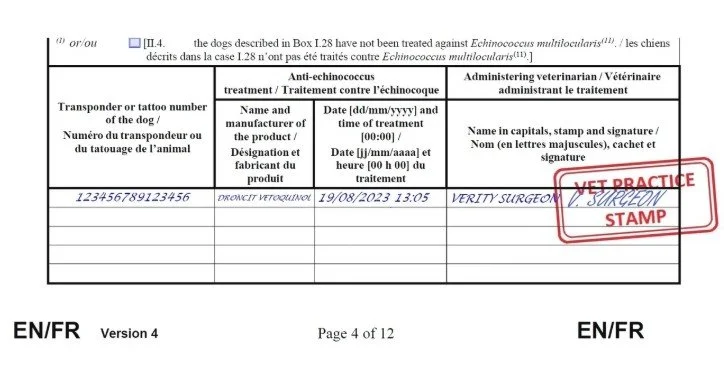
To return to the UK your dog will need a tapeworm treatment (this must contain a drug called Praziquantel) and must be administered by a vet in the EU 24-120 hours (1-5 days) before you are due to arrive back in the UK. This must be recorded in your AHC in the local language at the bottom of page 4 as proof the treatment was given. This is what it should look like once completed.
Cats do not need any tapeworm treatments.
For short trips lasting less than five days the tapeworm treatment can be administered before your departure.
Any vet in the EU can issue the tapeworm treatment, but you can also click here for a Google map of European vets for tapeworm treatment (complied by the group "Map of Recommended Vets for Tapeworm Treatments" on Facebook)
Other considerations:
Fleas & Ticks - Ticks are prevalent in many areas of the EU and carry more diseases than those found in the UK. A tick needs to be attached to their host for a period of around 24 hours before any disease can be transmitted so the best way to prevent infection is to use products that either repel ticks from attaching in the first place or kill them quickly. Not all products marketed as tick treatments kill ticks in less than 24 hours so it is important to check with your vet if you are travelling abroad.
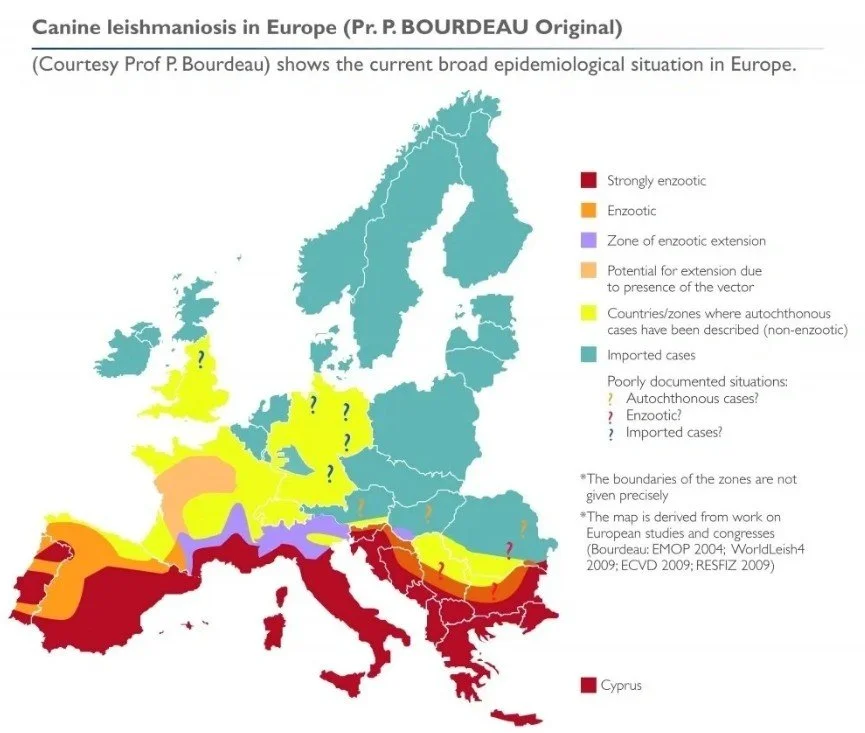
Sandflies – If you are travelling to the Mediterranean region, your dog may be at risk of contracting a disease called Leishmaniasis which is transmitted by a biting insect called sand fly. Sandflies are mainly active from April to October.
Leishmania is mainly found around the Mediterranean including Southern France, Spain, Portugal, Greece and Italy The red areas in the map below demonstrate the areas with the highest risk. The orange areas have moderate risk depending on the time of year.
Common repellent products include:
Seresto® collars (last up to 8 months) - Licensed for repelling fleas and ticks. Not licensed for repelling sand fly but shown in this study to be effective at reducing the risk of Leishmania. Seresto is the only sand fly repellent safe for cats.
Scalibor® collars (last up to 6 months) - Licensed for repelling ticks and sand fly but not fleas. Toxic to aquatic life, remove before swimming.
Vectra 3D® spot-on (applied monthly)
Frontline Tri-act® (applied monthly, every 3 weeks for sand fly)
Advantix® spot-on (applied monthly for ticks, every 2 weeks for sand fly) Do not allow dogs in water for 48 hours after application.
Meat based dog food cannot be taken into the EU - EU legislation states that travellers are not allowed to bring meat based dog food (including treats) into the EU. If your dog requires a special diet for medical reasons, there is a dispensation that allows you to transport up to 2kg of prescription pet food.
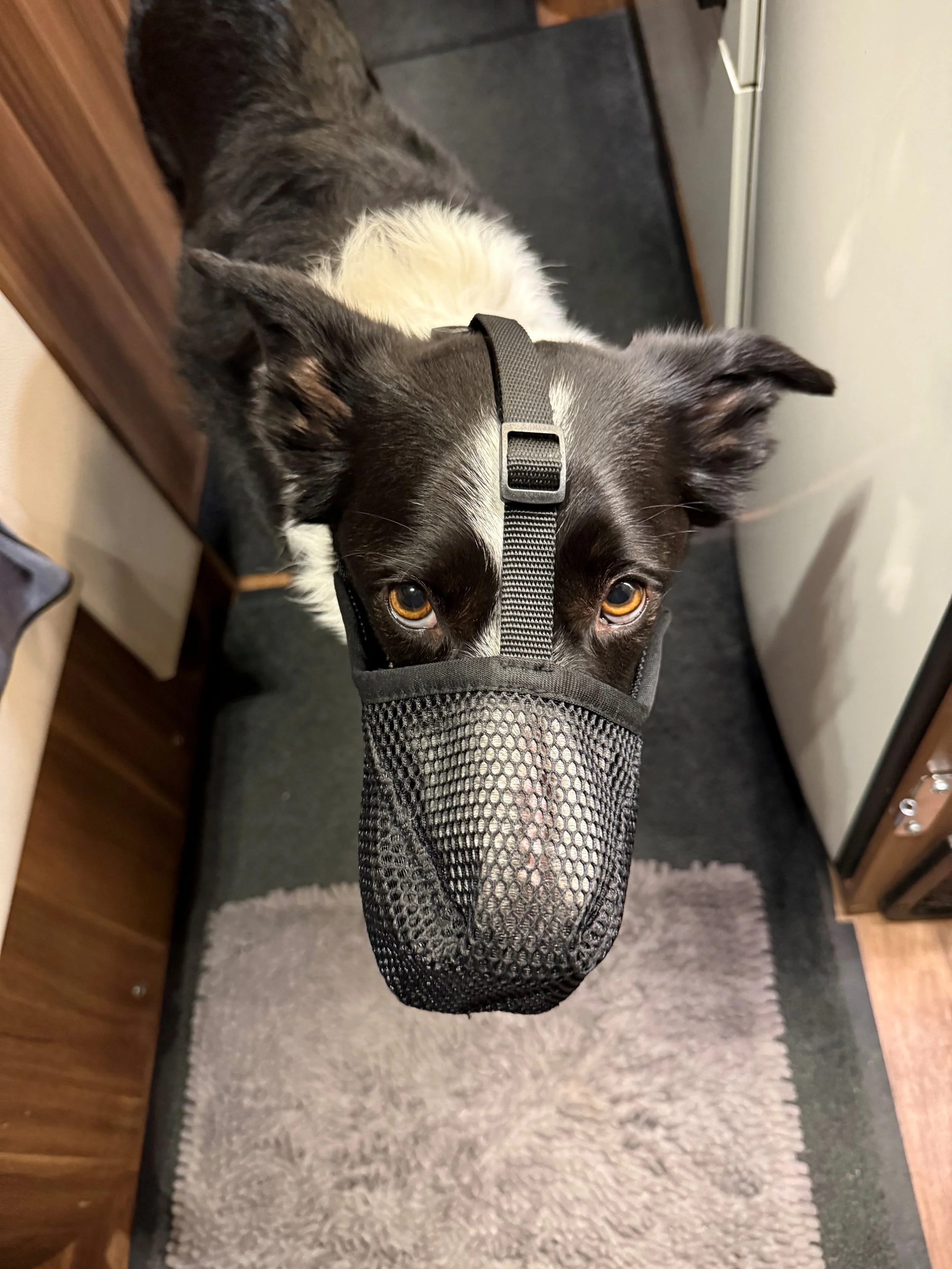
Muzzles – some ferry companies (while your dog is in public areas) and public transport in Europe will require your dog to wear a muzzle. It is worth bringing one with you and doing some training to get your dog used to wearing it before your trip.
Pet first aid kit – I always carry a pet first aid kit just in case, along with a tick removal kit.
I hope this helps you navigate the process more easily and you are able to have an amazing adventure in Europe with your pets.
Here are some of the places my Border Collie Echo has visited in Europe with me.